




Ep 33 - From Laundrylist, Wishlist or Checklist to a Game-Changing Strategy
Picture two teams in your company, six months apart. The first team is drowning. They have 47 "strategic initiatives" on their list, no clear way to prioritize, and every meeting devolves into debates about resources. Morale is terrible, and nobody can articulate what they're really trying to accomplish.
The Downfall of Bethlehem Steel
Bethlehem Steel built 80% of New York's skyline and more warships than any American company—then vanished. The failure wasn't foreign competition or union demands: it was Eugene Grace's 40-year reign creating a culture where innovation meant career suicide and outdated methods became sacred policy.
Strategy: How Disney Leveraged Adults' Nostalgia
Disney didn't accidentally create fanatics who spend $35,000 on 10-day vacations—they engineered them over 40 years using principles borrowed from religion and psychology. This investigation reveals how Michael Eisner's failed "age decompression" strategy evolved into Bob Iger's acquisition spree, transforming Disney from entertainment company into emotional monopoly.
The 5-Level Strategic Fluency Ladder
Most professionals plateau at strategic mediocrity without realizing it. Francis Wade reveals the five-level Strategic Fluency Ladder that separates executives who merely use strategy vocabulary from those who genuinely think strategically.
Ep 26 - Seth Godin - Stuck in Stale Strategy? Seeing Systems Which Hold You Back
Seth Excerpt
Comeback Stories
David vs. Goliath
Fresh Ideas
Big Mistakes
Winners vs. The Rest
MBA Refresh
Caribbean
Latest Movies

The Fall of Levi Strauss Factories
Strategic Timestamps
00:02:18 Davis lacked $68 to patent rivet reinforcement—Strauss funded patent for partnership, creating entire blue jeans category from minimal capital barrier. 00:06:46 San Antonio plant: 1,100 workers, $70 million annual output, integrated workforce—Levi's built communities through manufacturing before federal desegregation laws required integration. 00:10:32 Market share collapsed 50% to 26% (1990-1997) as Levi's missed baggy jeans, premium denim, teenager trends—caught in middle-market compression. 00:18:35 Offshoring became universal response, yet competitors maintained limited domestic production, automated, or marketed "Made in USA" premium—Levi's chose complete abandonment. 00:22:36 Every closure economically rational yet accumulated into institutional betrayal: survival built on worker sacrifice carries costs balance sheets never capture.
The Downfall of Bethlehem Steel
Strategic Timestamps
00:02:16 Economic necessity drove iron-to-steel pivot: iron rails failed under heavy traffic while steel rails lasted longer and commanded higher prices 00:08:07 Bethlehem provided steel for 80% of New York's 1920s skyline—Woolworth, Chrysler, Empire State—owning vertical construction through H-beam dominance 00:14:12 The 1959 strike opened foreign competition permanently: imports jumped from 2 million to 5 million tons and never returned to pre-strike levels 00:19:04 By the 1990s, Bethlehem Steel spent more on retiree benefits than on raw materials—demographic inversion crushing operational competitiveness 00:24:18 Nucor survived through aggressive technology adoption, non-union plants with flexible work rules, and strategic facility location—opposite of Bethlehem's rigidity
Epic Disruptions: Insights from Scott D. Anthony
TIMESTAMPS: 00:09:23 Asymmetric motivation: market leaders rationally exit worst customers while entrants build capability on that exact abandoned tier 00:23:24 Constantinople's Theodosian walls—moat, dual 15-foot walls, 96 towers—withstood a thousand years but fell to cannon in 47 days 00:38:56 Kodak bought Ofoto in 2000—four years before Facebook—but couldn't pivot from manufacturing to social networking business model 00:52:10 Bacon's 1620 reframe: pursuing knowledge shifts from heretical to heroical—the scientific method as history's most disruptive idea 01:02:08 Disruption begins at 50: crystallized intelligence peaks into the 70s—Gutenberg was 54, Croc 52, Jobs 52 at iPhone launch
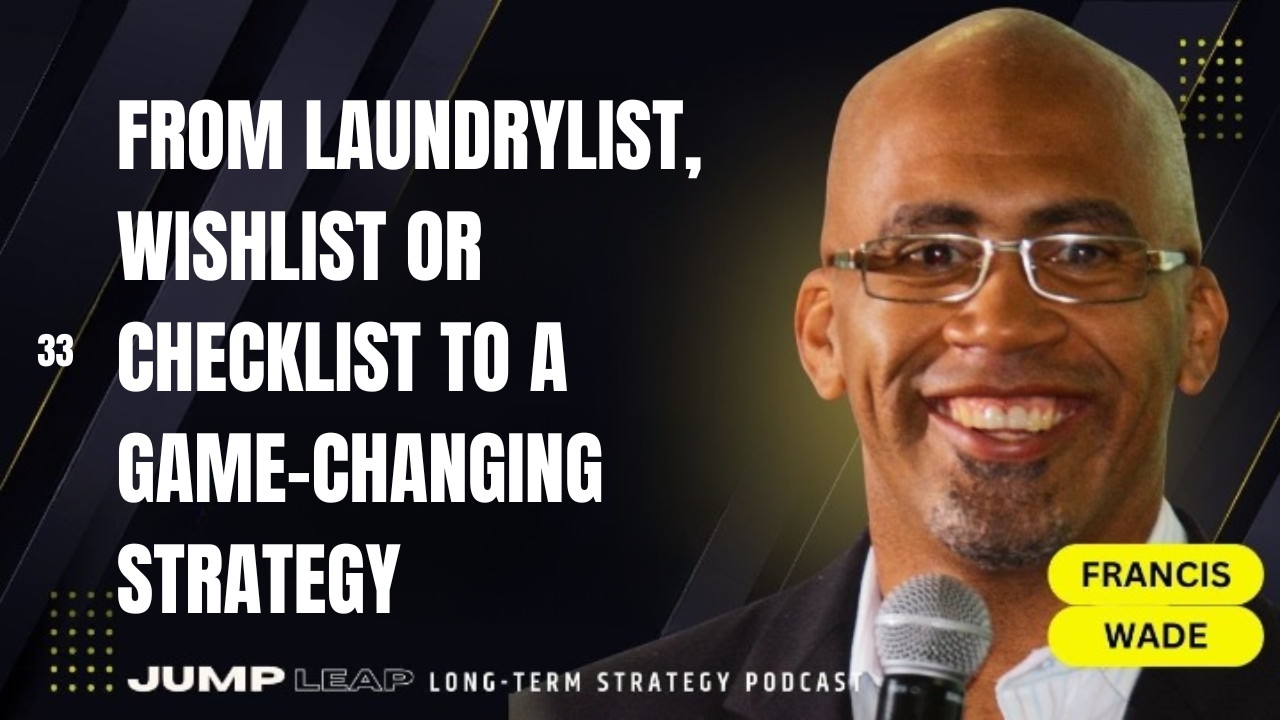
Ep 33 - From Laundrylist, Wishlist or Checklist to a Game-Changing Strategy
03:55 - Searching "strategic hypothesis" online makes executives more confused, not clearer—vocabulary alone won't save a strategy-less plan from board scrutiny.
08:05 - Teams mistake bureaucratic obligation for strategy, creating wish lists that satisfy checklists but fail Janet's "where's your overarching hypothesis?" test.
17:30 - When boards reject plans with 55 sensible initiatives, they're not critiquing ideas—they're exposing the absence of strategic cause-and-effect thinking.
52:09 - Strategy's brutal reality: everything's changing, data's flaky, and you get one shot at your hypothesis—not multiple lab experiments with do-overs.
57:21 - Six AI prompts reveal whether your plan contains testable strategic hypotheses or merely business-as-usual activities masquerading as surgical interventions.
What happened in between? They stopped confusing a strategic plan with actual strategy. Today, I want to walk you through that transformation, because the gap between these two states isn't about working harder—it's about thinking differently. Tune into this episode to join me in tackling this wicked problem.
The Private Equity Firm Buying All of Fast Food
Timestamps
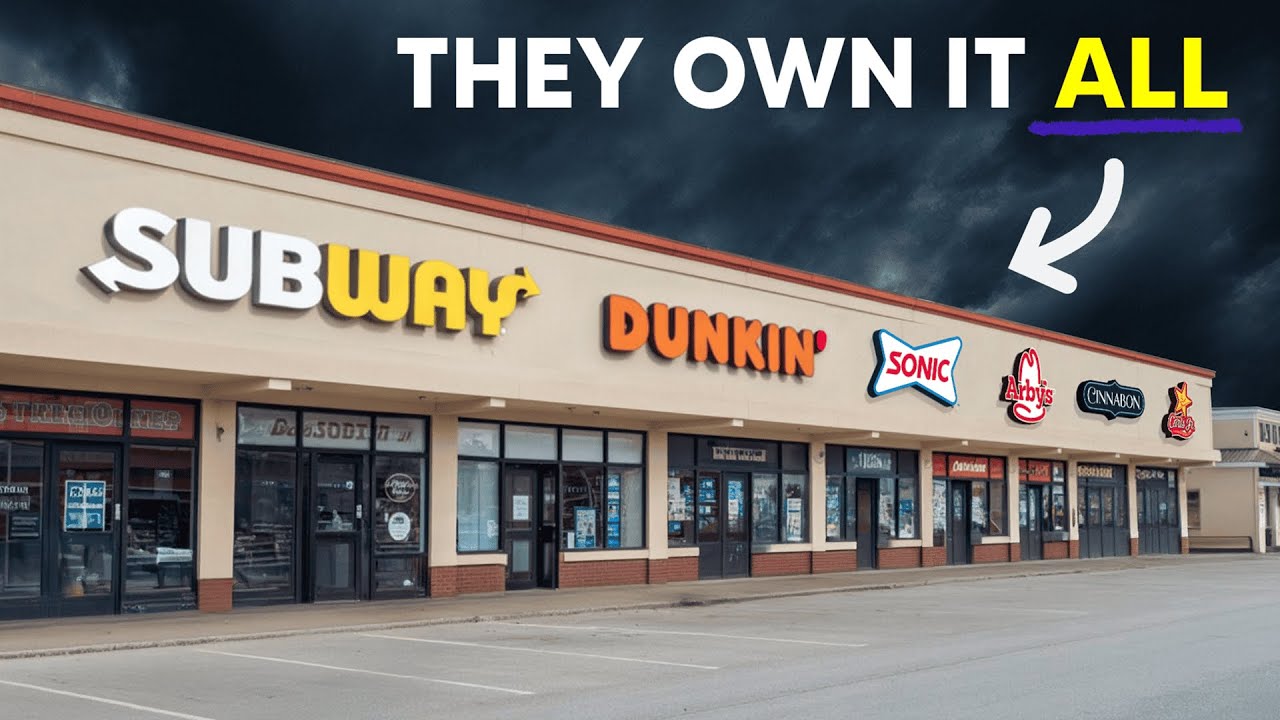
00:01:40 Franchisor investment thesis: Acquire royalty streams, not operations—licensors command high multiples (e.g., Blackstone/Jersey Mike’s) while franchisors handle unit-level risk. 00:04:02 Platform roll-up mechanism: Prove acquisition prowess with a $413M fund to raise a $1B war chest, enabling simultaneous scaling of multiple stagnant brand portfolios. 00:07:55 Scale versus quality paradox: 110,000 locations generate $100B systemwide revenue—3x McDonald’s units—yet key brands exhibit shrinking footprints and bottom-quartile unit economics. 00:09:28 Strategic red flag: Roark retains assets for 25+ years (e.g., Carvel), defying standard 4-7 year PE cycles, suggesting failed exits or reliance on late, uncertain compounding. 00:10:31 Performance skepticism: Two aborted IPOs (Inspire, GoTo Foods) and a graveyard of failed concepts (Ace Mortgage) signal market doubt about financial engineering as brand strategy.
Monetizing Expert: Your Pricing Is Killing Your Startup
5 Timestamps
00:03:45 Netflix beat Blockbuster through pricing model innovation: subscription with no late fees versus per-title rental—how to charge mattered more than product differentiation 00:08:45 Product-market-price fit requires testing willingness-to-pay during development: asking "do you like sparkling water at $10?" changes conversation versus product alone 00:12:15 Pareto value paradox: 20% of features drive 80% willingness-to-pay—founders give away high-value 20% free, then build 80% low-value features customers won't buy 00:16:57 AI pricing model framework: autonomy (copilot vs agent) and attribution (productivity vs outcomes) determine architecture—seat-based, hybrid, usage-based, or outcome-based positioning 00:27:41 Behavioral anchoring case: presenting $500K fixed versus $50K plus 10% outcome enabled 10x price realization through choice architecture and courage signaling
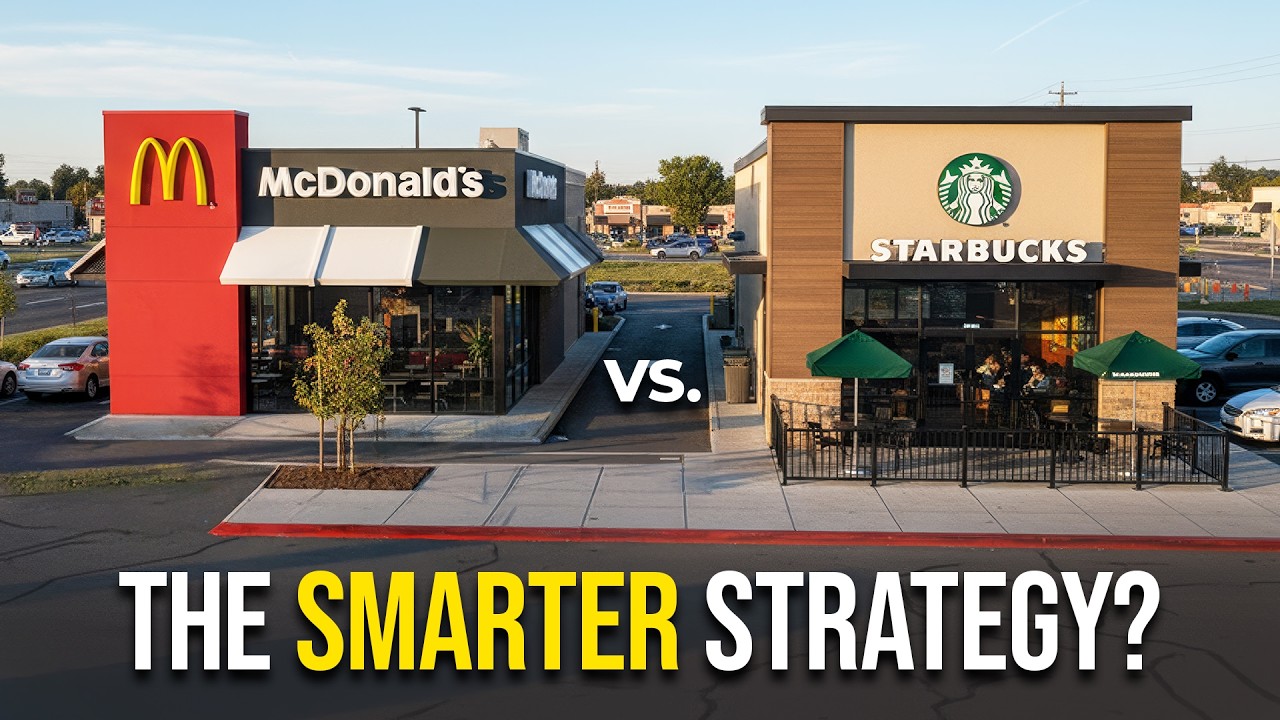
McDonalds owns their real estate. Why doesn’t Starbucks?
5 Timestamps
00:02:13 Kroc's model shift: franchisee 1.9% sales commission couldn't build empire—owning land and leasing back created upfront revenue stream plus expansion capital 00:04:47 Starbucks investor question drove strategy: commodity coffee requires first-mover advantage in each market before Maxwell House copies—speed trumped property ownership 00:06:14 Chicago 1987-1990 case: two-year operating losses sustainable because leasing avoided property debt service, enabling continued quality investment during market-building phase 00:08:13 Return profile divergence: Starbucks 18% operating returns on equipment/buildouts versus McDonald's 8% property returns—higher percentage versus higher stability trade-off 00:12:42 Investor arbitrage: Starbucks $20/sqft rent creates more value than local tenant's $25/sqft because Fortune 500 credit strength reduces default risk premium
Snapchat: From $30B Industry Leader to Another Dead App
5 Timestamps
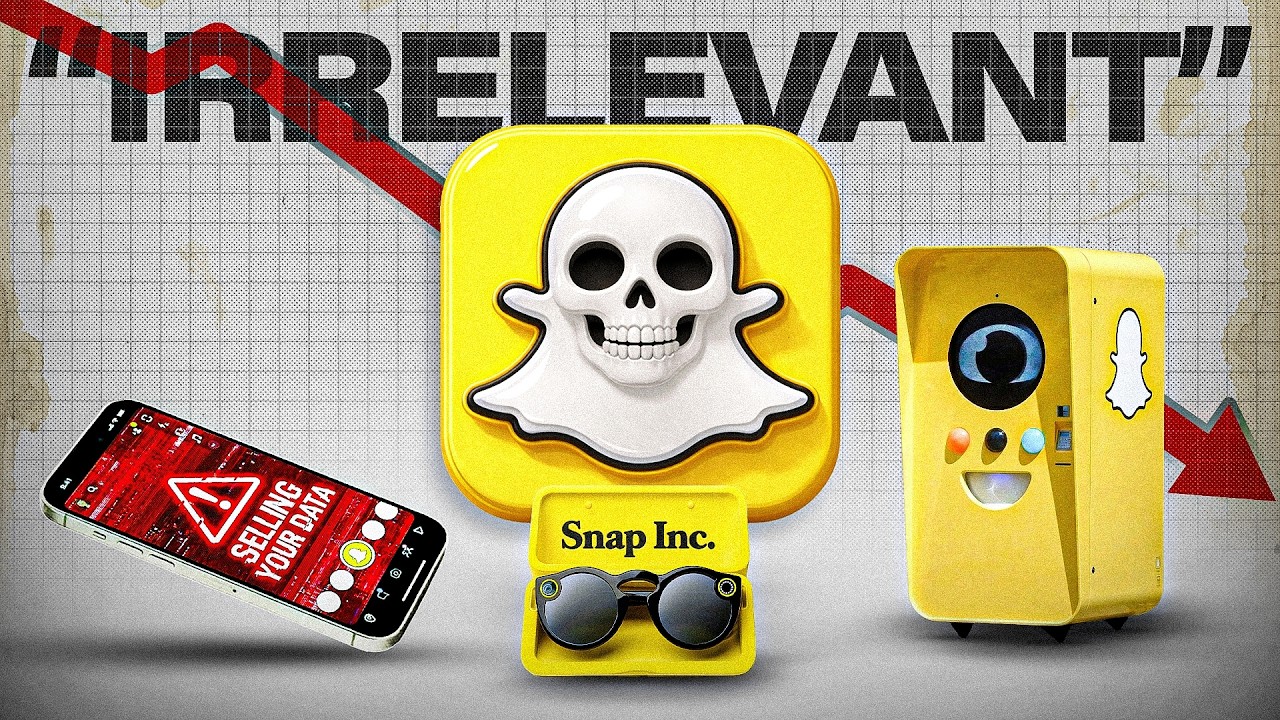
00:01:48 Spiegel rejected Zuckerberg's $3B acquisition at age 23 with zero revenue—genius required monetization moat, not just user growth trajectory 00:03:47 Instagram Stories launch August 2016 proved Snap's core vulnerability: viral features without network effects are trivially replicable by platforms with existing scale 00:06:16 Apple's App Tracking Transparency 2021 collapsed Snap's targeting-dependent ad model—stock dropped 43% single day May 2022 when macro blamed for structural failure 00:08:48 Ephemeral messaging architecture became criminal infrastructure: fentanyl distribution via disappearing messages generated Congressional hearings 2023, state lawsuits alleging facilitated minor deaths 00:13:05 Founder voting control enabled value destruction without accountability: $83 peak to single digits while Spiegel maintained strategic authority despite commercial failure
Beyond Meat: From $10 Billion Darling to Penny Stock
5 Timestamps
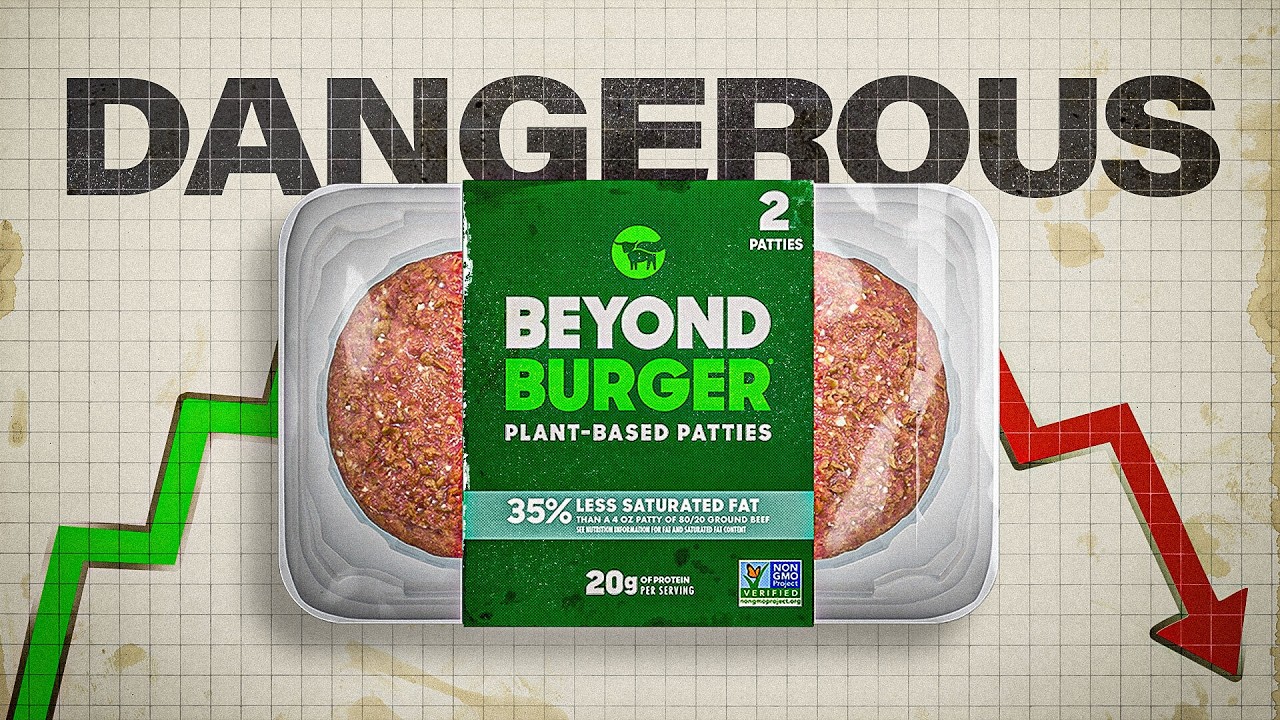
00:01:52 Tyson Foods investment October 2016 created strategic credibility signal: incumbent meat processor validating plant-based future legitimized category for mainstream capital 00:03:38 Triple narrative convergence drove IPO euphoria: veganism growth, climate impact reduction, cardiovascular health improvement—investment thesis optimized for values-aligned capital allocation 00:05:30 Price parity failure: plant-based alternatives cost 50-100% premium over conventional meat, requiring 95% of meat-eating population to pay more for inferior taste 00:08:23 Contamination scandal September 2022 Bloomberg investigation alleging mold and listeria in Pennsylvania facilities accelerated trust erosion amid ultraprocessed food backlash 00:12:06 Meme stock resurrection late October 2025 drove 1000%+ surge post-debt restructuring, but temporary sentiment reversal doesn't solve fundamental unprofitability and declining revenue
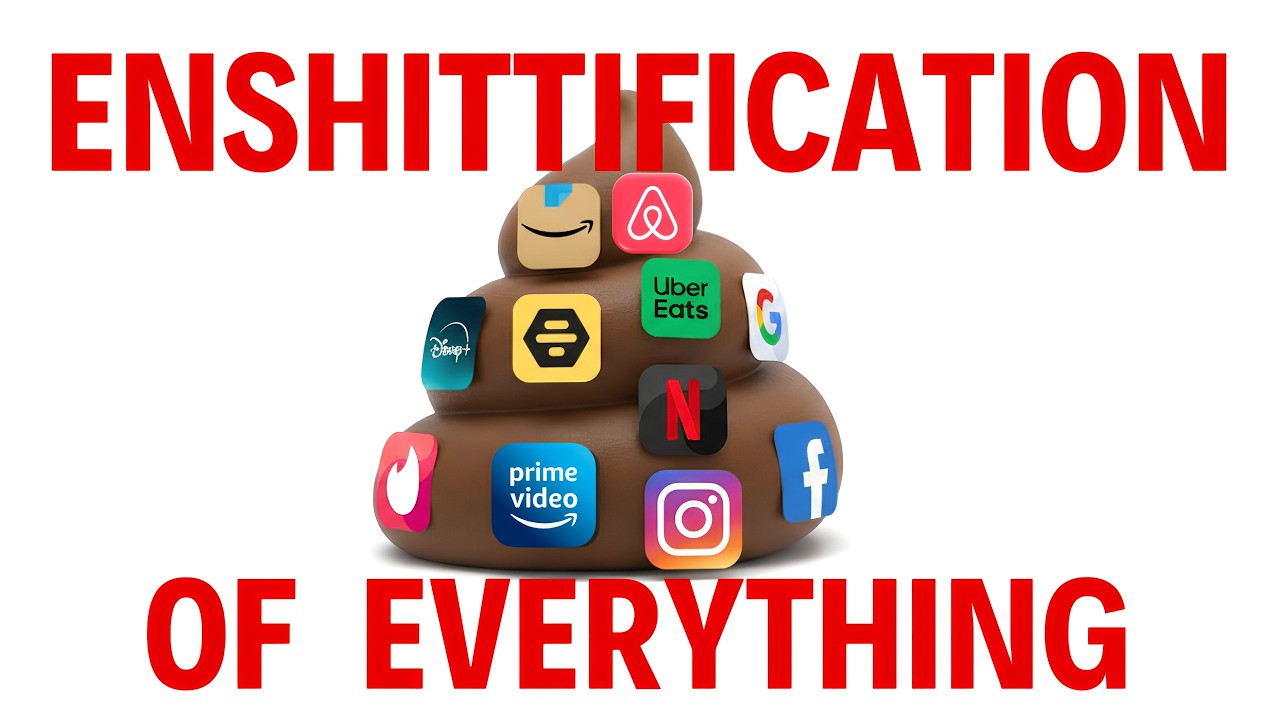
Why Every App is Getting Worse On Purpose
5 Timestamps
00:01:47 Millennial lifestyle subsidy: venture capital funded below-cost services (Uber, Amazon, Netflix) to eliminate competition through predatory pricing, not efficiency 00:04:23 Stage two pivot: platforms abuse users to serve business customers—Amazon search results now prioritize advertiser payment over product quality or price 00:07:12 Leipzig University research confirms Google's inverse complexity-ranking relationship: simpler AI-generated content ranks higher because confusion extends session duration and ad exposure 00:09:47 Match Group lawsuit reveals dating app economics: successful matching destroys customer lifetime value, so platforms gamify loneliness through algorithmic match suppression 00:12:34 Enshittification indicates weakness not strength—companies extract maximum value when innovation exhausted, preceding collapse pattern seen in MySpace, Yahoo, AOLJump-Leap Long-Term Strategy Podcast
Recent Episode
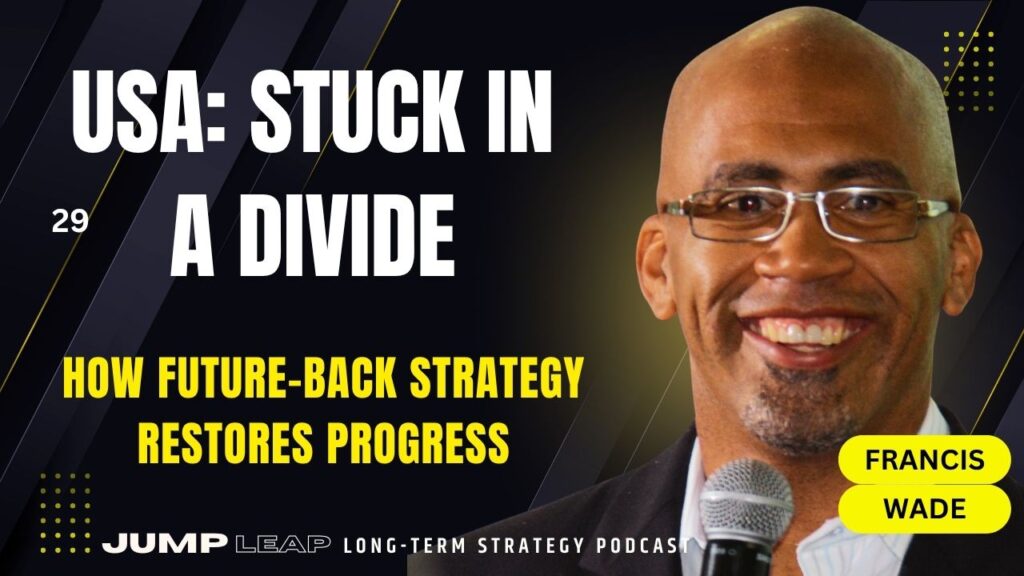
Let’s imagine for a moment that you are a citizen or resident of the USA. You love the country and especially the vision of the founding fathers. However, you are distressed by the degree of the political divide. It has hijacked popular attention. People seem to hate each other. Is there a way to find inspiration beyond the current uncertainty? Can leaders possibly come together if only they took a long-term view of the country, and the world?